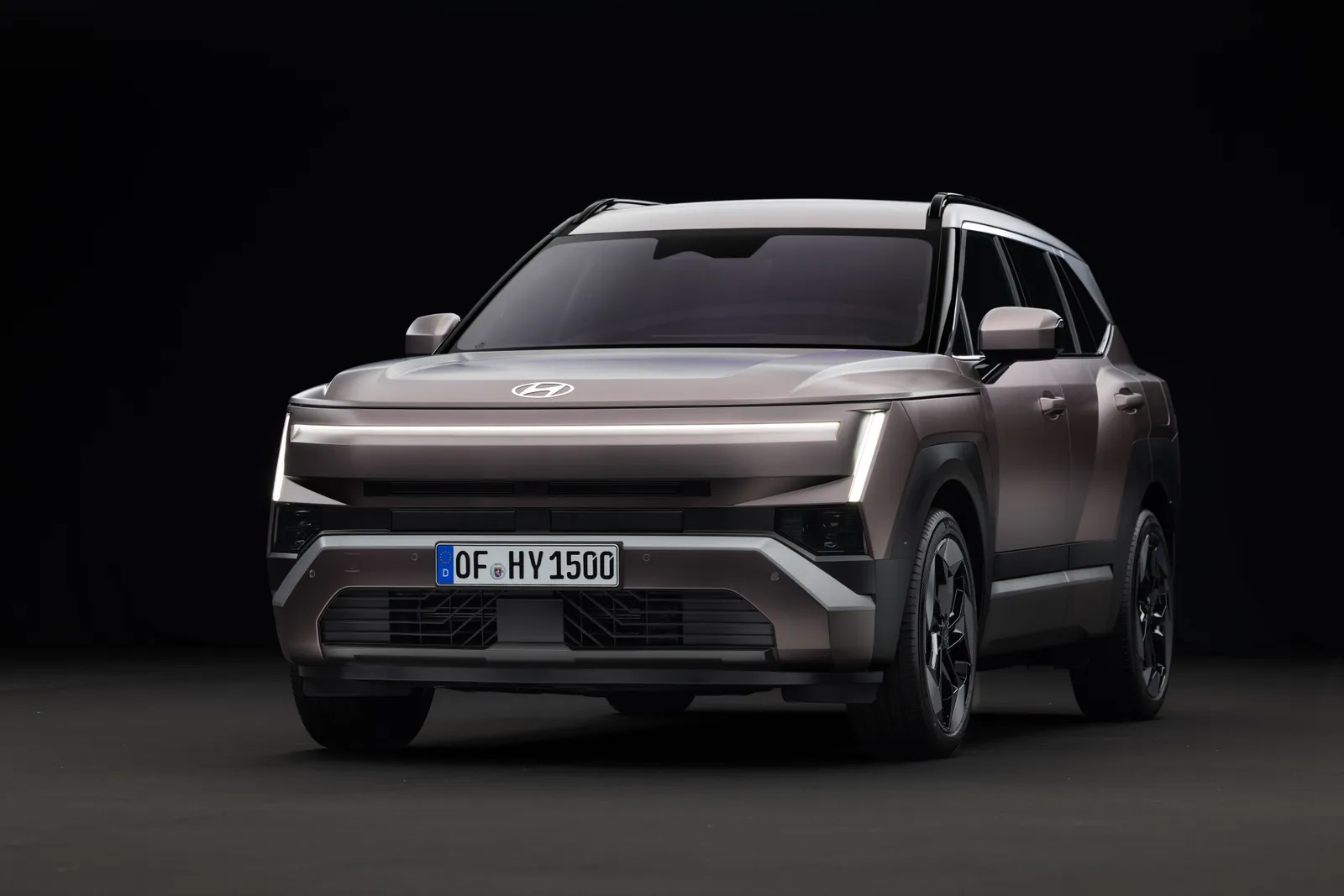
Hyundai Tucson
Comfortable family SUV with hybrid and 301bhp plug-in options
By Adrian, Car Lease Deals UK · Updated 16 October 2026
Hyundai's Tucson goes back to 2004 and is now in its fourth generation. It was sold as the ix35 in the UK from 2010 to 2015, then returned under its own name in 2015. Today's range spans 148bhp and 178bhp petrols, the 258bhp Hybrid and the 301bhp plug-in hybrid.
At a glance
- Class
- Family SUV / Crossover
- Body styles
- 5-door SUV
- Generation(s)
- First generation Tucson (2004 to 2010), second generation sold in the UK as the ix35 (2010 to 2015), third generation Tucson (2015 to 2020), fourth generation Tucson (2020 to present)
- Years
- 2004 to present
- Fuel
- Petrol, Hybrid, Plug-in Hybrid
- Transmission
- Varies by version and model year; check the Hyundai specification for the exact version
- Drivetrain
- Varies by version; check the Hyundai specification for the exact version
- Rivals
- Nissan Qashqai, Kia Sportage, Ford Kuga, Volkswagen Tiguan
- Known for
- Distinctive styling, roomy cabin, 48.7mpg Hybrid
A transparent score for the Hyundai Tucson, worked out from official UK figures, not opinion. Running costs and emissions compare it like for like: same class, same fuel and powertrain.
How we score cars20.0p a mile on the 1.6 T-GDi 148 (39.8 mpg) at current UK prices, lower than 65% of petrol mid-size SUVs on sale
16% benefit-in-kind on the 1.6 T-GDi PHEV 301, best in range for 2026/27
161 g/km on the 1.6 T-GDi 148, lower than 68% of petrol mid-size SUVs on sale
546 litre standard boot (seats up)
0-62 mph in 7.3s on the 1.6 T-GDi PHEV 301 (301 bhp), manufacturer estimate
3 powertrains: petrol, hybrid, plug-in
Score for the 2026/27 tax year. It updates automatically as fuel prices, energy prices and tax rates change. See the full method.
Our view
For most mileages the Hybrid is the Tucson to buy, riding comfortably in a roomy cabin. The PHEV needs home charging and a company car tax reason to make sense, and N Line versions ride firmly.
Our editorial view, separate from the data score above.
Explore the range
Pick a body style, engine and trim. Everything updates together, so you only see combinations that were actually offered.
Advance is the core trim, with a 12.3-inch touchscreen with navigation, a digital driver display, wireless phone charging and alloy wheels.
Boot 546 litres (Hybrid), 616 litres (petrol), 558 litres (PHEV), length 4,500mm. A practical, five-seat family SUV with a high driving position, generous rear legroom and a wide boot opening, offered with a range of petrol, hybrid and plug-in hybrid powertrains.
| Engine | Fuel | Power | Torque | 0–62 | Economy | CO₂ |
|---|---|---|---|---|---|---|
| 1.6 T-GDi 148 | Petrol | 148 bhp | 253 Nm | 9.1s | 39.8 | 161 g/km |
| 1.6 T-GDi 178 | Petrol | 178 bhp | 400 Nm | 9.2s | 37.2 | 173 g/km |
| 1.6 T-GDi PHEV 301 | Plug-in hybrid | 301 bhp | ≈ 367 Nm | ≈ 7.3s | 256.8 | 23 g/km |
| 1.6 T-GDi Hybrid 258 | Hybrid | 258 bhp | 350 Nm | 8.4s | 48.7 | 131 g/km |
Official figures, checked October 2026. Values marked ≈ are approximate.
Plug-in hybrid economy is the official WLTP weighted figure, which assumes the battery is charged regularly. With a flat battery a plug-in hybrid runs mostly on petrol, so real economy is much lower on long journeys. Electric economy is shown in miles per kWh.
- 1.6 T-GDi Hybrid 258 (hybrid)48.7 mpg
- 1.6 T-GDi 148 (petrol)39.8 mpg
- 1.6 T-GDi 178 (petrol)37.2 mpg
Official WLTP combined figures from the Vehicle Certification Agency. Compare more cars in our economy league table.
Running costs
Insurance groups and premiums vary by driver, location and history, so these are indicative bands only.
Fuel cost for this car
Yearly cost at 10,000 miles on official economy. Petrol 175.3p and diesel 200.0p a litre (UK average, week commencing 12 October 2026); electric 26.32p per kWh charged at home (1 October to 31 December 2026).
Tax for this car
Road tax and company car tax on official CO2 figures at 2026/27 rates. The expensive car supplement and P11D value depend on the list price, which you enter in the calculators.
Which Tucson suits you
The Hybrid's 48.7mpg combined figure and 131g/km CO2 suit regular motorway journeys without needing to plug in.
The wide rear cabin takes buggies, luggage and weekend loads. In the plug-in hybrid the battery takes some floor space, so it is worth checking the boot against your own luggage.
The range runs from the 148bhp petrol, rated at 39.8mpg and 161g/km, through the 178bhp petrol and 258bhp Hybrid to the 301bhp plug-in hybrid, so the powertrain can be matched to mileage and access to charging.
The plug-in hybrid's 23g/km CO2 figure is the main point of interest for business users looking at benefit-in-kind tax.
Best way to get this car
How the main ways to fund a Tucson compare. General guidance only, not financial advice or an offer.
Popular way to drive a new Tucson with fixed monthly costs and no depreciation risk.
Flexible option with a final balloon payment, allowing buyers to change cars every few years.
Straightforward ownership route spreading the full cost over fixed instalments.
Short-term flexibility at a premium cost, useful for temporary needs.
Avoids finance charges entirely but ties up a significant lump sum in a depreciating asset.
Leasing vs buying
- ✓Company car drivers can use the PHEV's 23g/km figure in their tax comparisons
- ✓The 258bhp Hybrid gives 48.7mpg on a lease with no charging routine
- ✓Home charging lets a lease driver run the 301bhp PHEV on electricity for short trips
- ✓The 148bhp petrol stays the plain choice for a driver who wants no hybrid system on the books
- ✓A home wallbox suits an owner planning to keep the PHEV for years
- ✓The Hybrid's 48.7mpg and 131g/km keep running costs below the petrols
- ✓A buyer can pick between two petrols, the Hybrid and the PHEV, then settle on a trim
- ✓The simple 148bhp petrol suits an owner who wants to run the car for years without a battery to think about
Which works out cheaper depends on your annual mileage, how long you keep the car and whether you want to own it. Try the true cost of leasing calculator to compare.
Frequently asked questions
Is the Hyundai Tucson a reliable car?+
Reliability depends on the individual car rather than the badge. On a used Tucson, a full service history and a check for any outstanding recall work are worth looking for, and on a PHEV or Hybrid it is worth asking about the condition of the battery system.
Which Hyundai Tucson engine is most efficient?+
The plug-in hybrid has the lowest official CO2 figure at 23g/km, though real-world economy depends heavily on how often it is charged. Of the other versions, the Hybrid is rated at 48.7mpg and 131g/km, the 148bhp petrol at 39.8mpg and 161g/km, and the 178bhp petrol at 37.2mpg and 173g/km.
What is the difference between the Hybrid and PHEV Tucson?+
The Hybrid combines a 1.6-litre T-GDi petrol engine with an electric motor and a small battery that cannot be charged externally, for 258bhp combined. The PHEV has a larger battery that can be charged from the mains and produces 301bhp combined.
Is the Hyundai Tucson a good family car?+
Yes. It has a spacious rear cabin that takes a pushchair and luggage. Rear ISOFIX points and a full set of safety equipment suit child seats.
Does the Hyundai Tucson hold its value well?+
There is no verified residual value data here, so no firm claim can be made. Used values depend on the powertrain, trim, mileage and condition. On a PHEV, battery condition and charging history are worth checking, and on any used car a full service history helps.